Introducing the OneCode Framework: Governing the Agentic Future
Ibrahim Olanigan
Editor in Chief
Introducing the OneCode Framework: Governing the Agentic Future
Claude Code is incredible. It builds features in minutes. But ask any team using it in production, and they’ll tell you the other side of the story: deleted environment files, committed secrets, regressions in core logic, and infinite “vibe coding” loops that burn budget just to fail a CI check.
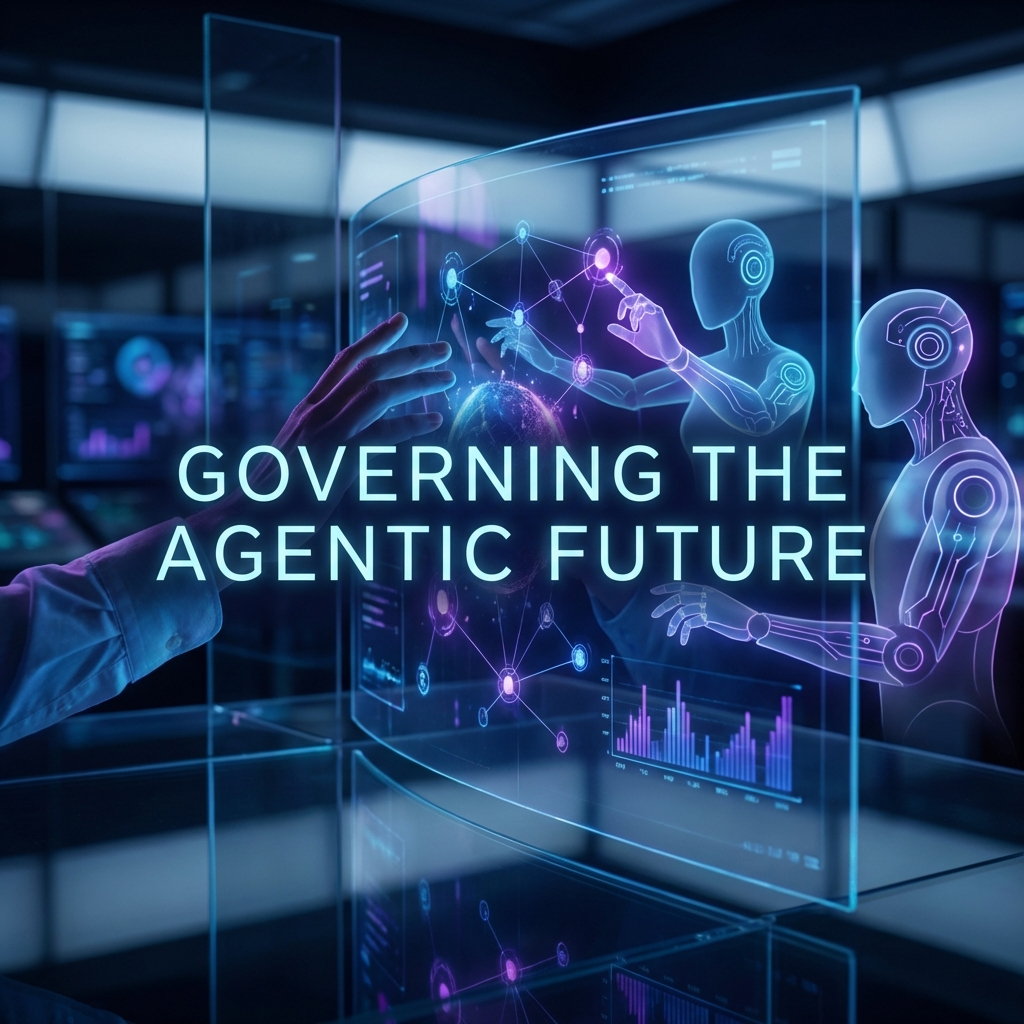
The issue isn’t the agent. It’s the lack of a standard. We are trying to shoehorn autonomous agents into a human workflow without the necessary guardrails. There is always a huge risk and cost when an agent confidently believes it is solving a problem while actively breaking your business logic.
To harness the true power of AI without the chaos, we need a fundamental shift in how we structure human-agent collaboration. We need to move from “Black Box” autonomy to “White Box” governance. We call this the OneCode Framework.
The Transparency Gap: AI Governance for Black Box Agents
Current agentic tools often operate as a “Black Box.” You feed in a request, and you hope for a correct output. But in professional environments, hope is not a strategy. We need “White Box” systems that are compliant, auditable, and transparent.
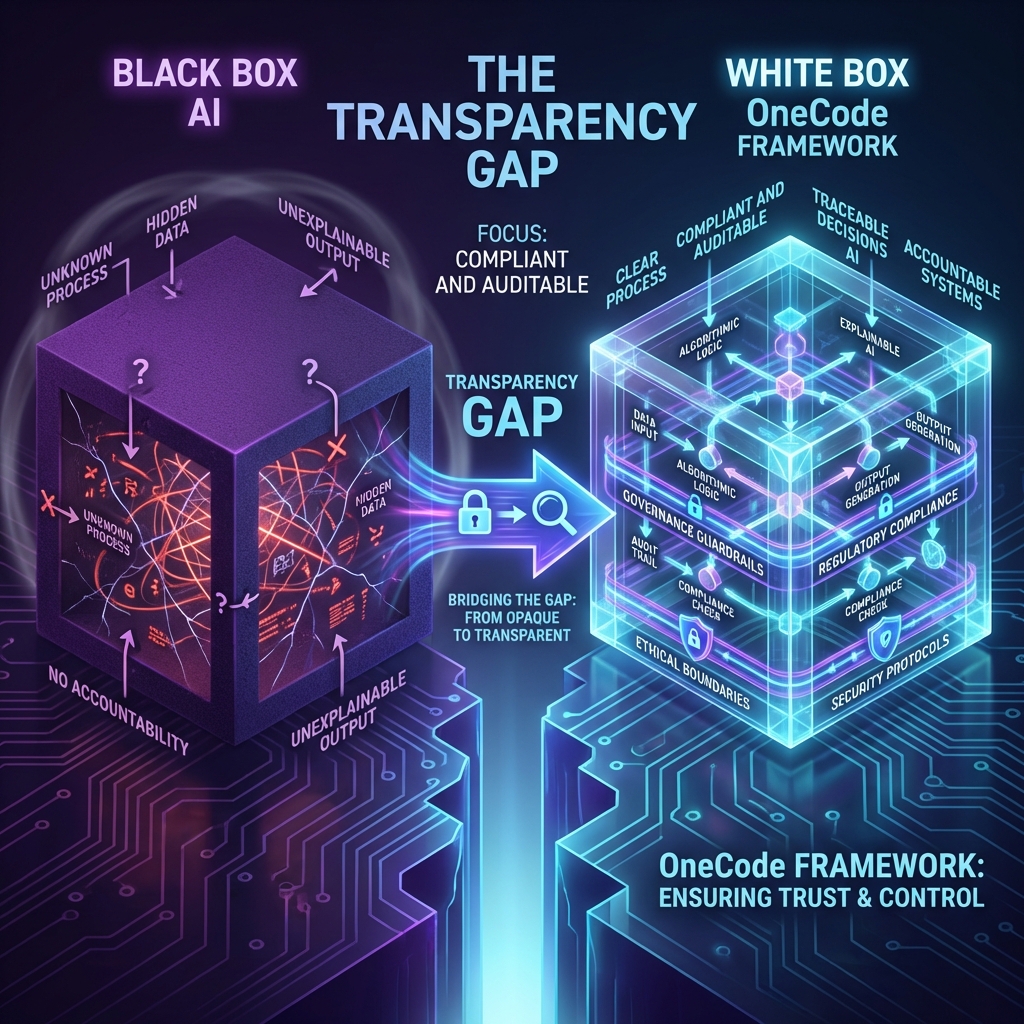
Consider the difference between using an autonomous coding agent like Claude Code on its own versus using it within the OneCode Framework:
- Risk without OneCode: The agent works in isolation. Your team stops learning, and the AI becomes an unchecked “Architect.” You are left merely reacting to PRs generated by an unsupervised entity.
- Control with OneCode: The agent becomes part of your team, not your replacement. You ensure continuous learning while accelerating delivery. Governance is enforced strictly through the software lifecycle—every commit, PR, and merge is gated by policy.
[!IMPORTANT] Governance by Design: The OneCode Framework is built on a simple but powerful premise: Agentic work must be grounded.
The Economics of Agentic Coding: The High Cost of Vibe Coding
Transitioning to agentic workflows brings a new economic reality. It’s not just about the subscription cost of an LLM. It’s about the hidden cost of “Slop”—infinite loops where an agent continually retries a task, fails invisible policy checks, and burns tokens.
- The “Vibe Coding” Trap: An ungoverned agent can easily enter a cycle of “Vibe Coding”—making changes that feel right but fail to compile. A single unchecked loop can burn through $20 of tokens in an hour without producing a viable result.
- The OneCode Solution: By enforcing specifications before execution, we stop the slop at the source. We move from paying for “attempts” to paying for “compliance.”
OneCoder: The OS for Agentic Work
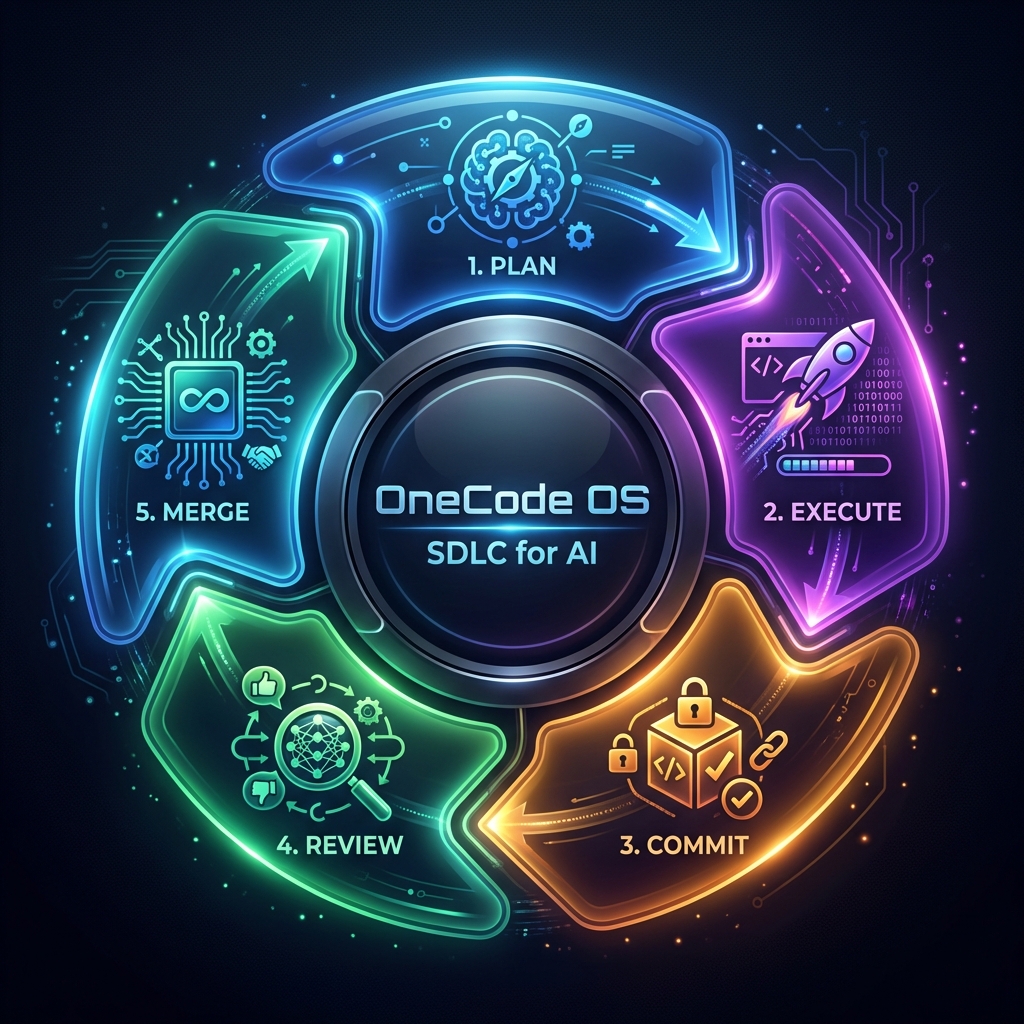
OneCoder is the realization of this framework. It is the IDE for the future of agentic work. Whether it’s CodingOps (modern software engineering) or ContentOps (outbound segmentation, research), the workflow remains the same:
- Plan: Define the “What” (Spec).
- Execute: Agent handles the “How” (Skills).
- Commit: Push to a persistent store (DB, Git).
- Review: Human oversight via PR/Notification.
- Merge: Verified and Done.
The OneCode Framework ensures that as we scale our use of agents, we increase our control, compliance, and quality, rather than sacrificing them for speed.
Start Governing Your Agents
Ready to move beyond vibe coding? OneCoder provides the structure your team needs to ship reliable agentic software.
Join the Workspace and start building with the OneCode Framework today.